2019 Lawson Lecture
Why are there so many big earthquakes in Alaska, and does that tell us something about California?
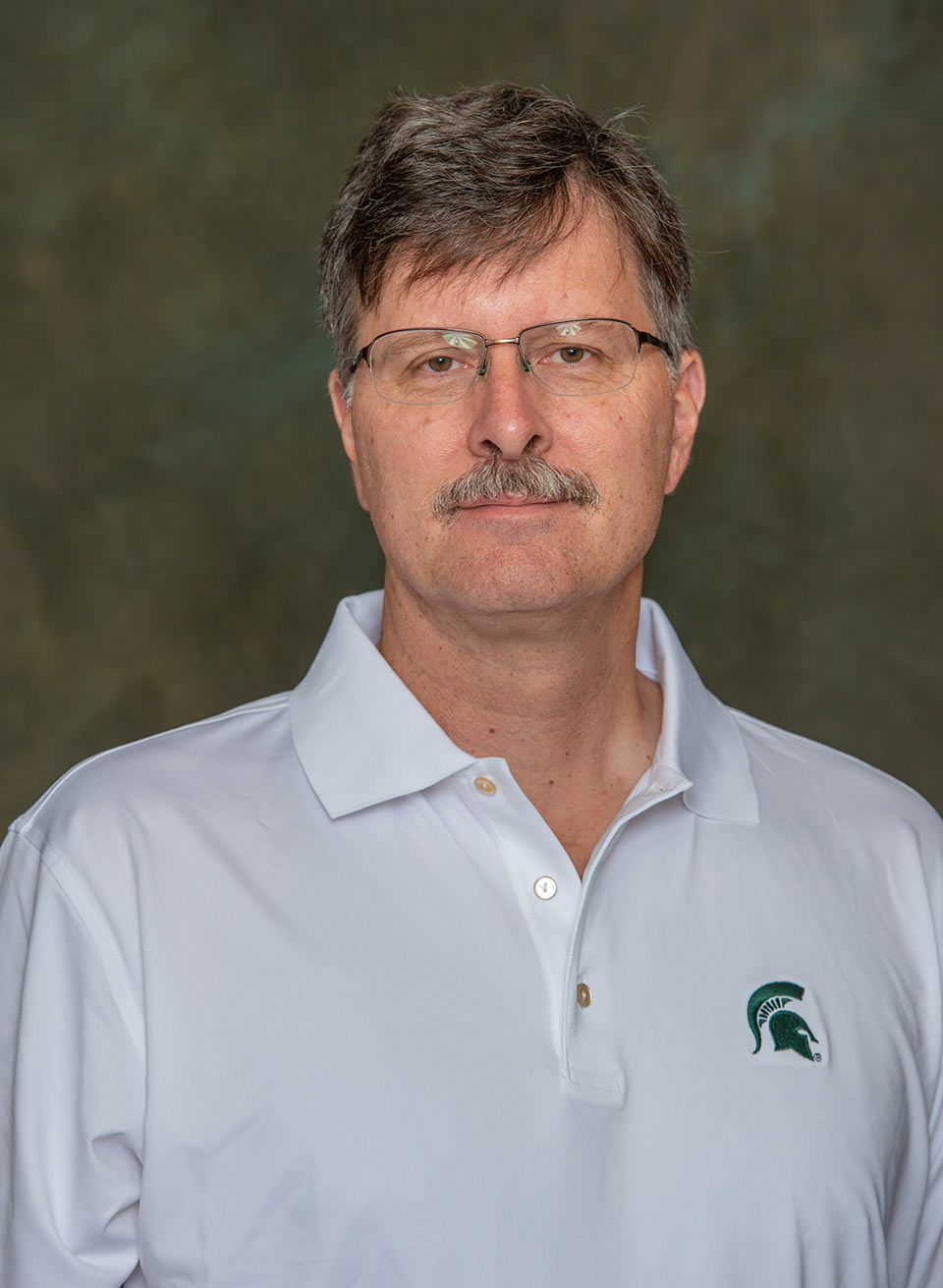
Presented by:
Dr. Jeffrey T. Freymueller
Michigan State University
5:30-6:30pm
Wednesday May 1st
Anna Head Alumni Hall
2537 Haste St, Berkeley, CA
Many people think that California is the most earthquake-prone state in the US, but in fact 75% of all earthquakes in the United States with magnitudes larger than 5.0 happen in Alaska. The last few years have seen a series of large earthquakes across Alaska, some of them with unusual features or locations. Like California, Alaska is part of a highly active plate boundary between the Pacific and North American plates, and most parts of both states are moving and deforming as part of a distributed plate boundary. I will talk about several of the recent large earthquake in Alaska, and what our knowledge of active tectonic motions can (and can’t) tell us about them, and how the earth responds to large earthquakes even years afterward.
View recent Lawson Lectures
Click the top left icon (three horizontal lines and a triangle) to view a YouTube playlist of some of our recent Lawson Lectures
Previous Lawson Lectures:
- 4/18/2018
- "The HayWired earthquake scenario"
- Panel discussion with Ken Hudnut, Brad Aagard, Anne Wein, Keith Porter, Laurie Johnson, and Jenn Strauss
- (No video available)
- 4/26/2017
- "The Future of Past Earthquakes: Insights into Earth Behavior from Earthquake Geology and Paleoseismology"
- Dr. David P. Schwartz, USGS
- (No video available)
- 4/16/2016
- "Earthquakes: Predicting the Inevitable"
- Stefan Wiemer, Swiss Seismological Service; Emily Brodsky, UC Santa Cruz; Richard Allen, BSL
- Watch the Lecture on YouTube
- 4/29/2015
- "Induced Earthquakes in the 21st Century"
- Dr. Greg Beroza, Stanford University
- Watch the Lecture on YouTube
- 4/16/2014
- "A California view of the 1964 Alaska earthquake: Lessons learned, forgotten, and relearned about reducing tsunami vulnerability"
- Dr. Lori Dengler, Humboldt State University
- Watch the Lecture on YouTube
- 4/08/2013
- "Warning California: Science and Technology to Reduce the Growing Earthquake Threat"
- Dr. Richard Allen, BSL
- 4/25/2012
- "Earthquakes from the Top to the Bottom of the Magnitude Scale: Insights into Earthquake Physics from EarthScope"
- Dr. William Ellsworth, USGS
- 5/04/2011
- "Two Earthquakes in Christchurch, New Zealand: Lessons for California "
- Dr. Mary Comerio, UC Berkeley
- 4/28/2010
- "The Haiti Earthquake of 12 January 2010: A Geologic Perspective"
- Dr. Carol Prentice, USGS
- 4/14/2009
- "Building Resilient Communities: Fresh Challenges for Earthquake Professionals"
- Chris Poland, Degenkolb Engineers
- 4/09/2008
- "A tectonic time bomb in our backyard: Earthquake potential of the Hayward fault"
- Dr. Roland Burgmann, UC Berkeley
- 4/24/2007
- "The Parkfield 2004 Earthquake: Lessons From the Best-Recorded Quake in History"
- Dr. Andy Michael, USGS Menlo Park
- 4/15/2006
- "Designing For Disaster: The UC Berkeley Seismic Retrofit Program"
- Dr. Mary Comerio, UC Berkeley
- 4/18/2005
- "The 2004 Giant Earthquake and Tsunami: Observations and Lessons Learned"
- Dr. Barbara Romanowicz, UC Berkeley
- 4/21/2004
- "Earthquake Conversations"
- Dr. Ross Stein, USGS
- 4/22/2003
- "New Earthquake Probabilities for the San Francisco Bay Area: What you should know"
- Dr. David Schwartz, USGS